Creative Visionaries

Context
Project Setup
As one of four product designers on this charitable initiative, I conducted research and contributed to design decisions across the lifecycle.
We discovered the initiative together and built the product from the scratch, navigating every phase of the design lifecycle to turn early ideas into a complete digital experience.
My Goal
Transform the experience of visually impaired individuals by creating a dedicated platform for high-quality communication and creative exchange. Master diverse research methodologies through practice, deepen my knowledges in accessibility.
About The Project
Creative Visionaries is an inclusive web platform and app designed to unite and empower creative children and teenagers with visual impairments. This is a dedicated support hub where young artists and storytellers can connect, grow, and express themselves in a safe, accessible environment.



Discover
Define
Ideate
Prototype
Test
Visual
Design

Kick-off meeting
Roadmap
RACI matrix
Competitor research
Survey
User Interview
Analysis and resume
Personas
JTBD
Empathy map
Problem statement
VPC
Mind map
CJM
IA
User flow
Wireframing
Interactive prototypes
Webflow user testing
Making adjustments
Visual research
Website /Mobile app UI
UI Kit
Problem & Research
Visually impaired young creators had no platform built for them
The community for visually impaired children was scattered across general-purpose tools — a Telegram channel with around 700 members for audio content, and a Facebook page for news. Neither was built for accessibility, neither offered creative tools, and neither gave young users a way to collaborate or build confidence through making things.
“I love drawing and reading fairy tales. I’d really like a place where I can share them and get likes from othes”
Girl, 12 years old
“I really wish more people knew how to interact with visually impaired people correctly, what they should and shouldn’t say or do.”
Mother of a visually impaired child
Going to the community first
We combined surveys, stakeholder events, and direct relationship-building with the community. Surveys gave us patterns; events gave us real stories.
Quantitative survey
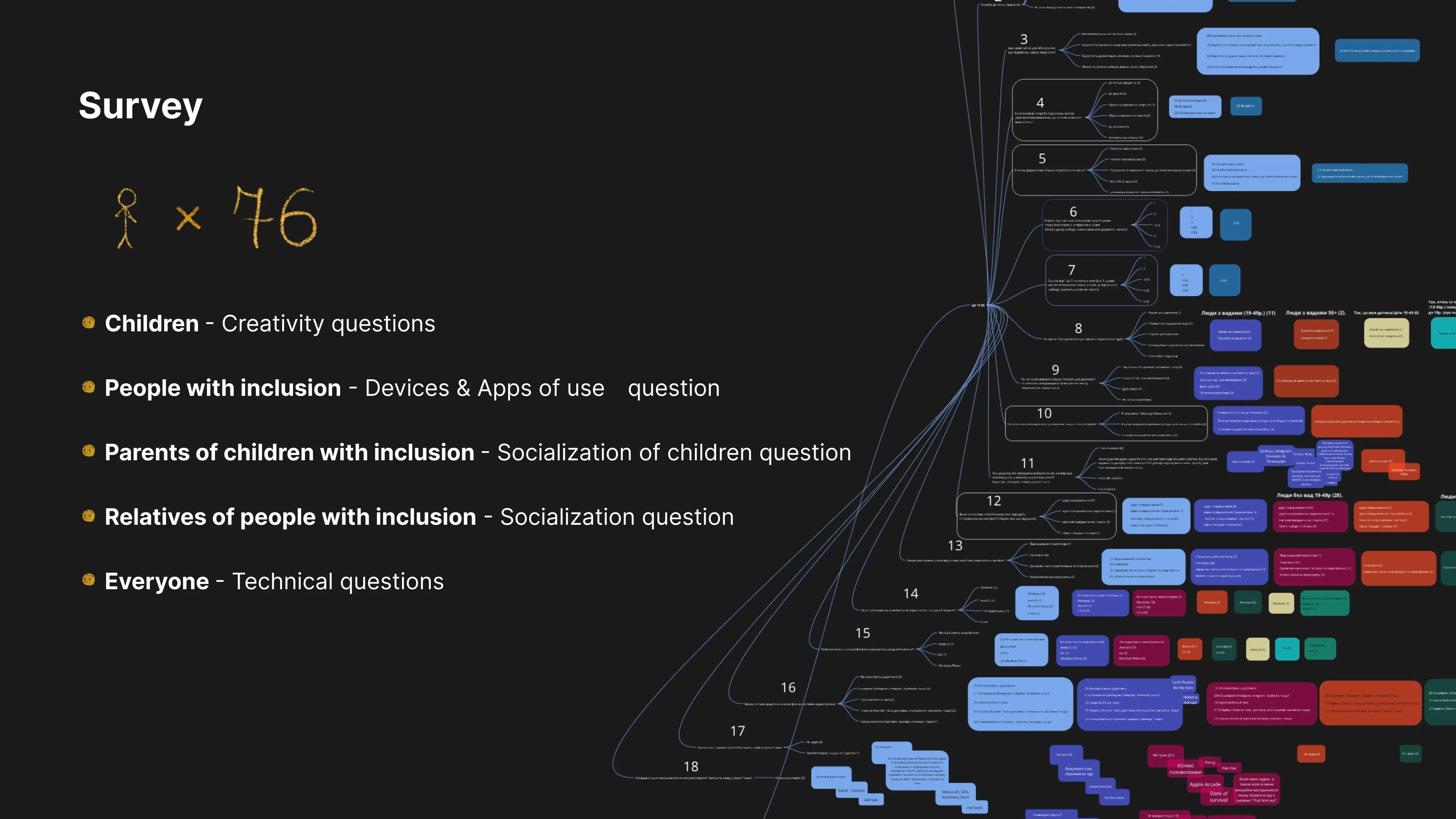
We shared a survey across various community groups, reaching people of all ages. The results were eyeopening they helped us discover surprising user habits and needs we never would have guessed on our own.
Stakeholder events & observation
We attended events where visually impaired children performed and shared their creative work. We didn’t just watch; we actively listened to the kids, their parents, and their teachers to truly understand their daily lives.
Trust-building meetings
We held multiple conversations just to listen. Our goal was to build trust and understand their real hopes, their fears, and exactly where current apps were letting them down.
Beyond the accessibility checklist
WCAG was just a start. The goal was a product visually impaired children would genuinely enjoy using.
Great screen reader experience
Easy and enjoyable to use, not just functional.
Creative tools for everyone
Audio, music, and art formats that work for any level of vision.
A safe space
A moderated community that rewards positive interactions.
Help for parents & educators
A companion website for learning inclusive communication.
How It Was

Telegram
Channel with audio content and discussions, which is managed by talented authors. Has around 700 users
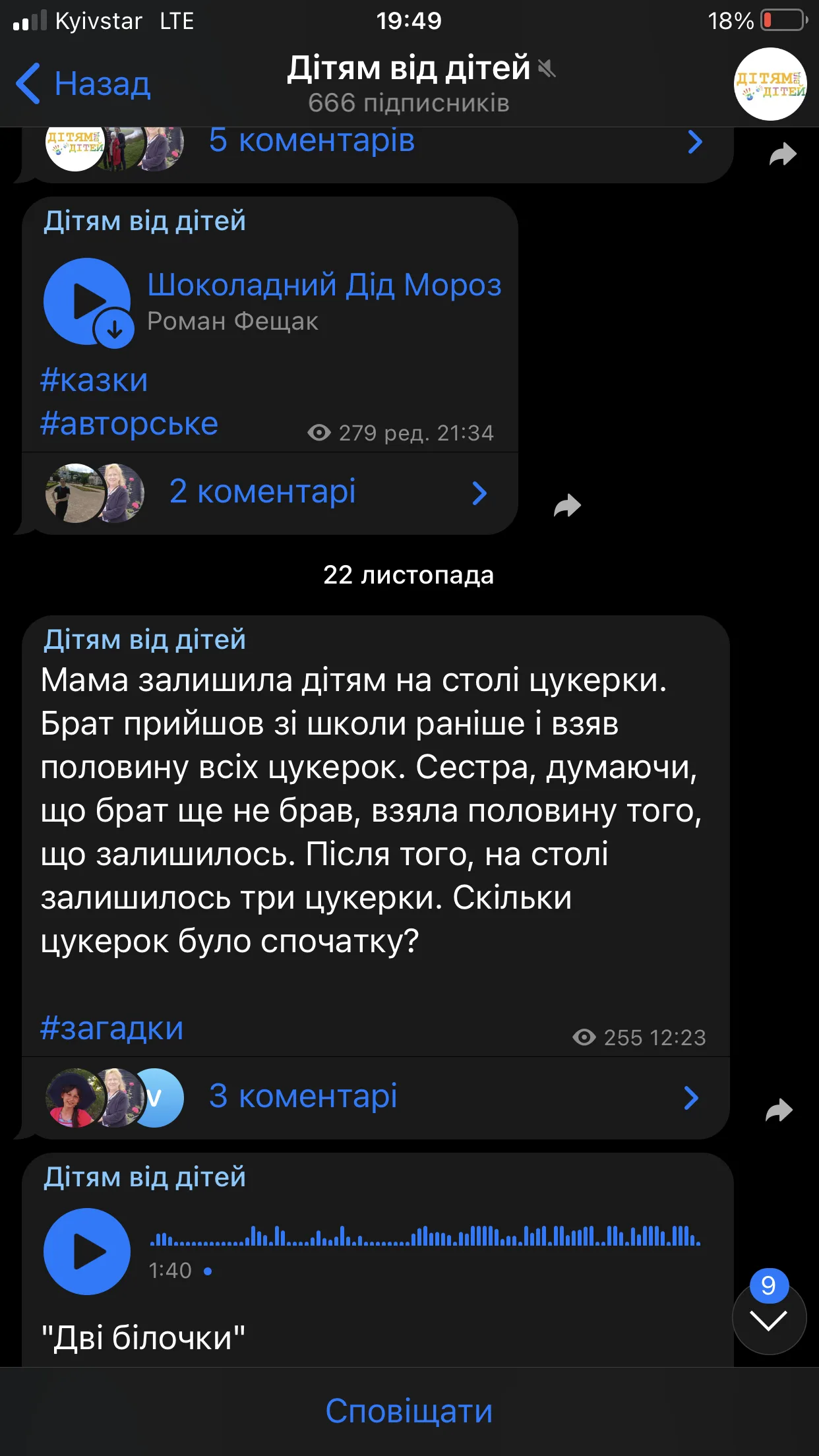

Public page for news and updates

What Stakeholders Shared

Way to provide mentorship and advices

Fairy tale therapy as a previous diagnosis

Find common ground for kids to erase inequalities

A safe space with support and necessary help
Building Trust Through Personal Connection
First Meeting With Stakeholders
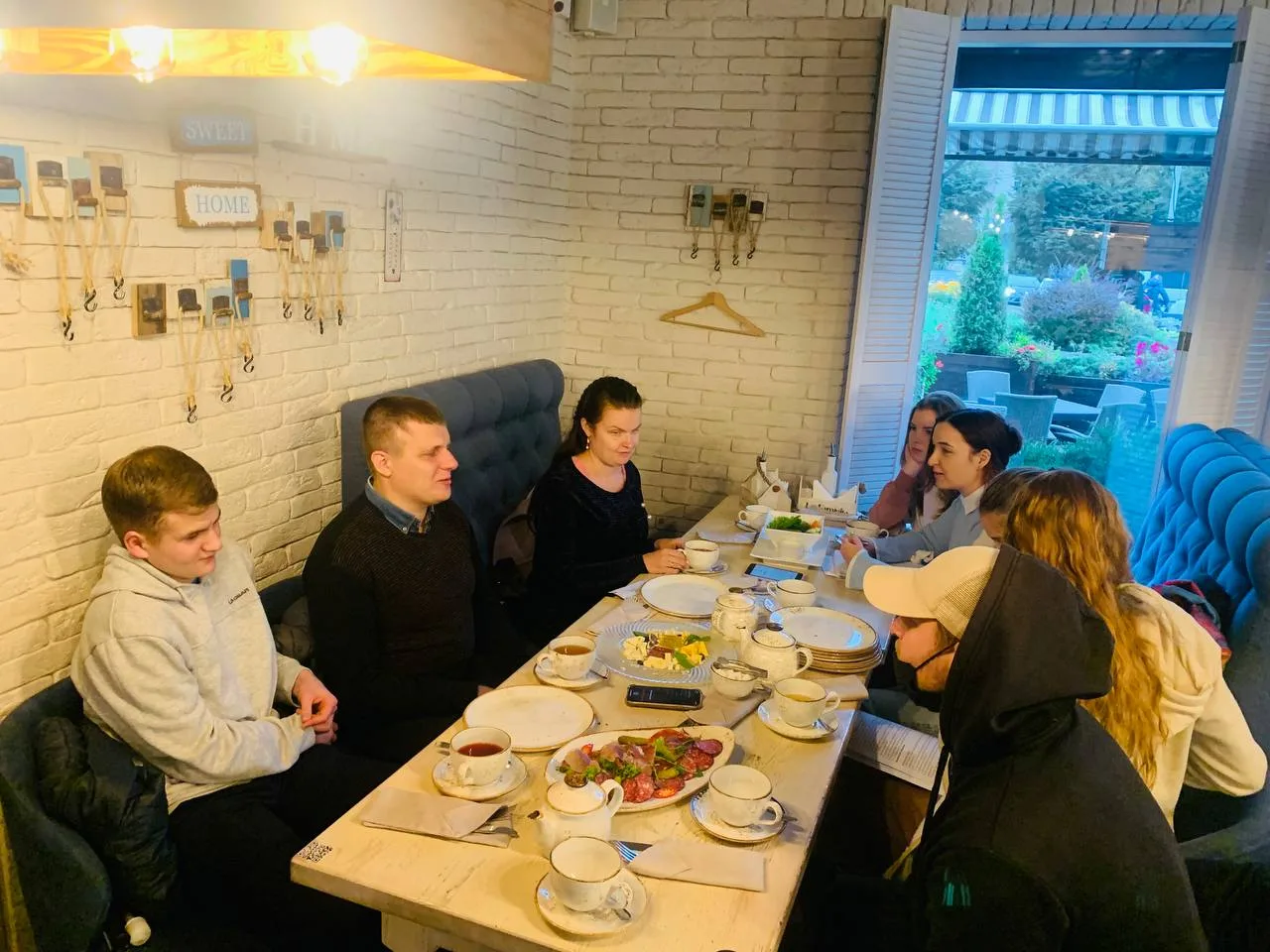

What are your expectations?
...


We attended our stakeholders event
where visually impaired people showcased their talents. Some played instruments, while others sang...
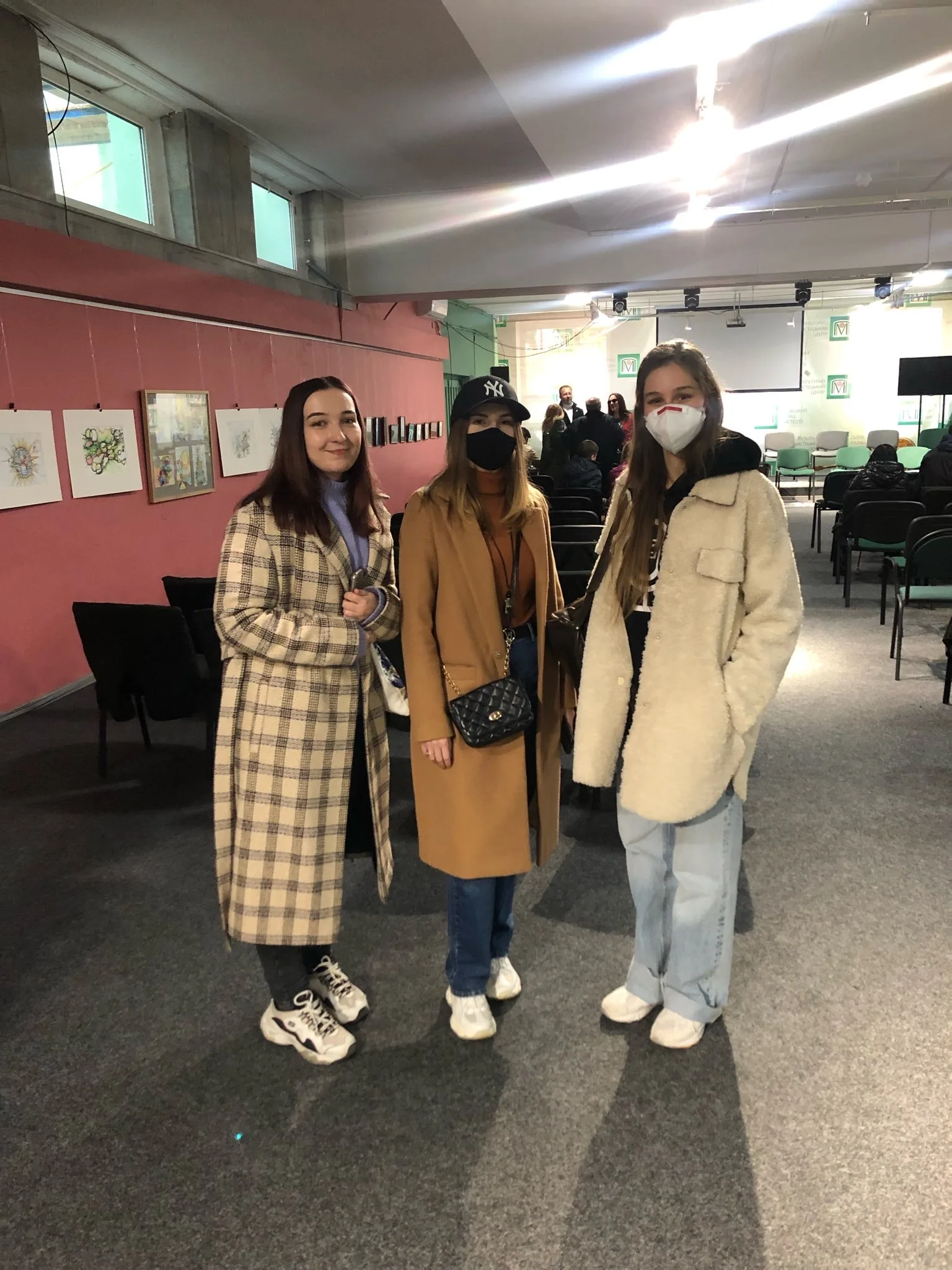


What a talented people they are!
Quantitative researchone of the key stages
A survey was posted online through social media, and 76 people answered it. Some of them also gave their contact details for follow-up interviews. The survey had a lot of questions to cover a wide range of ages. Thanks to this detail, it was easier to understand the needs of the audience.
The most popular hobbies among children


Who do children share their creativity with
Children
with disabilities
With
parents
Children
without disabilities
With
friends
What format of fairy tales is preferred
Does not read
Text
Audio
Interactive
“Absolutely any feedback is welcome. For me, the most important thing is that people notice my creativity, as I want to improve in what I do.”
Girl, 12 years old
“There isn’t a single convenient app with a good audio editor. There’s always background noise, and preparing the recording for publication is a real struggle.”
Boy 16 years old
Synthesis & Process
Things that changed our direction
Data and user stories pointed to this key insights, which became our core principles.


Insights
Most of the active daytime children use the phone
Children with disabilities are more likely to need outside approval and support
Most children with disabilities prefer to do everything themselves
Most children preferred to share their thoughts and concerns with friends
From Job Story
to Effective Solution
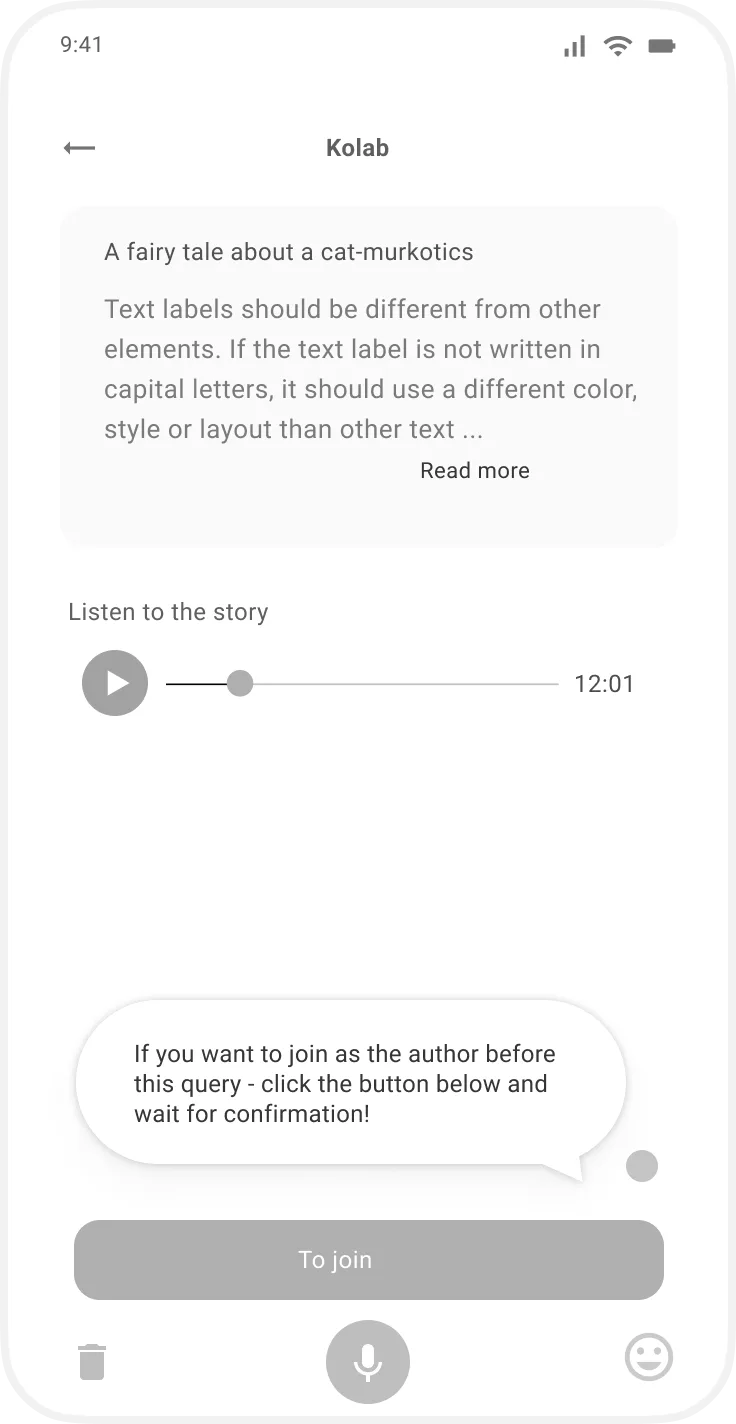
Add function of collaboration to allow multiple users to work on the same project

Kolin
Newcomer

9:41
The world of Hobo

Make editor multifunctional and rich of tools for diverse formats of posts
Wireframing
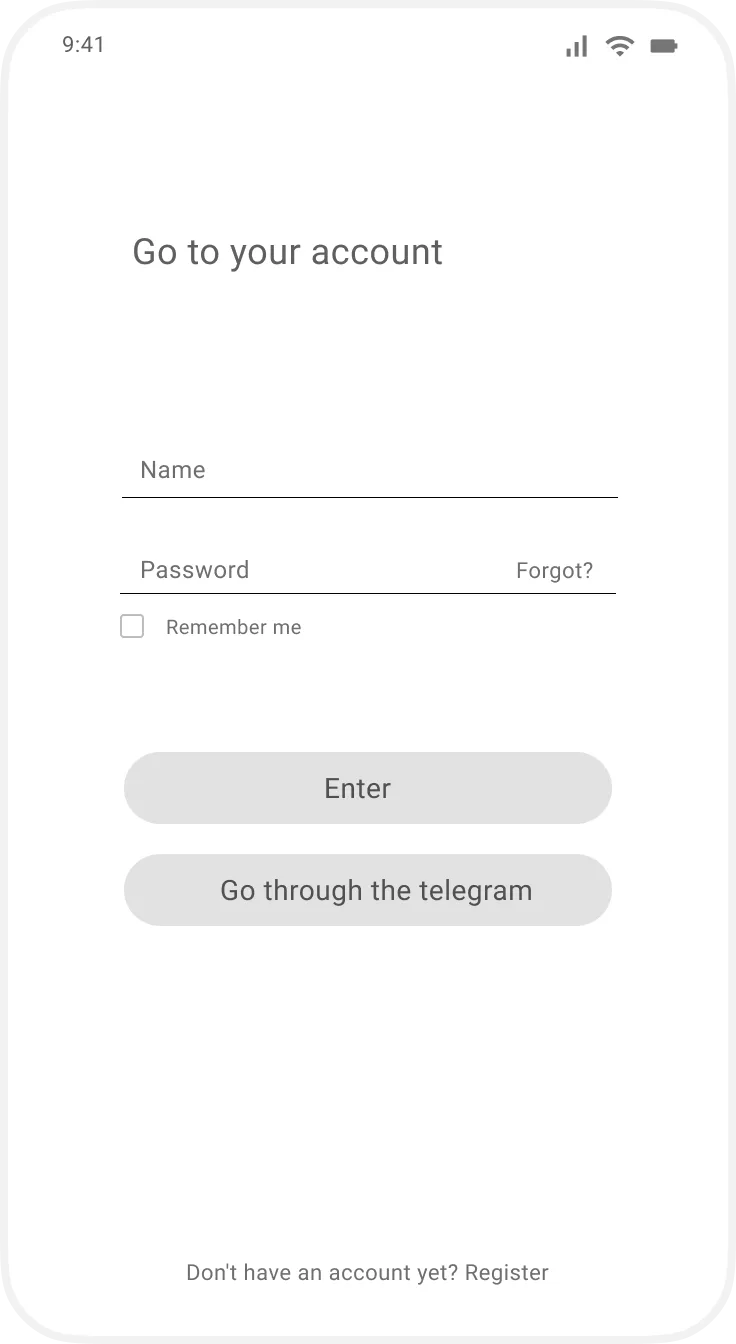
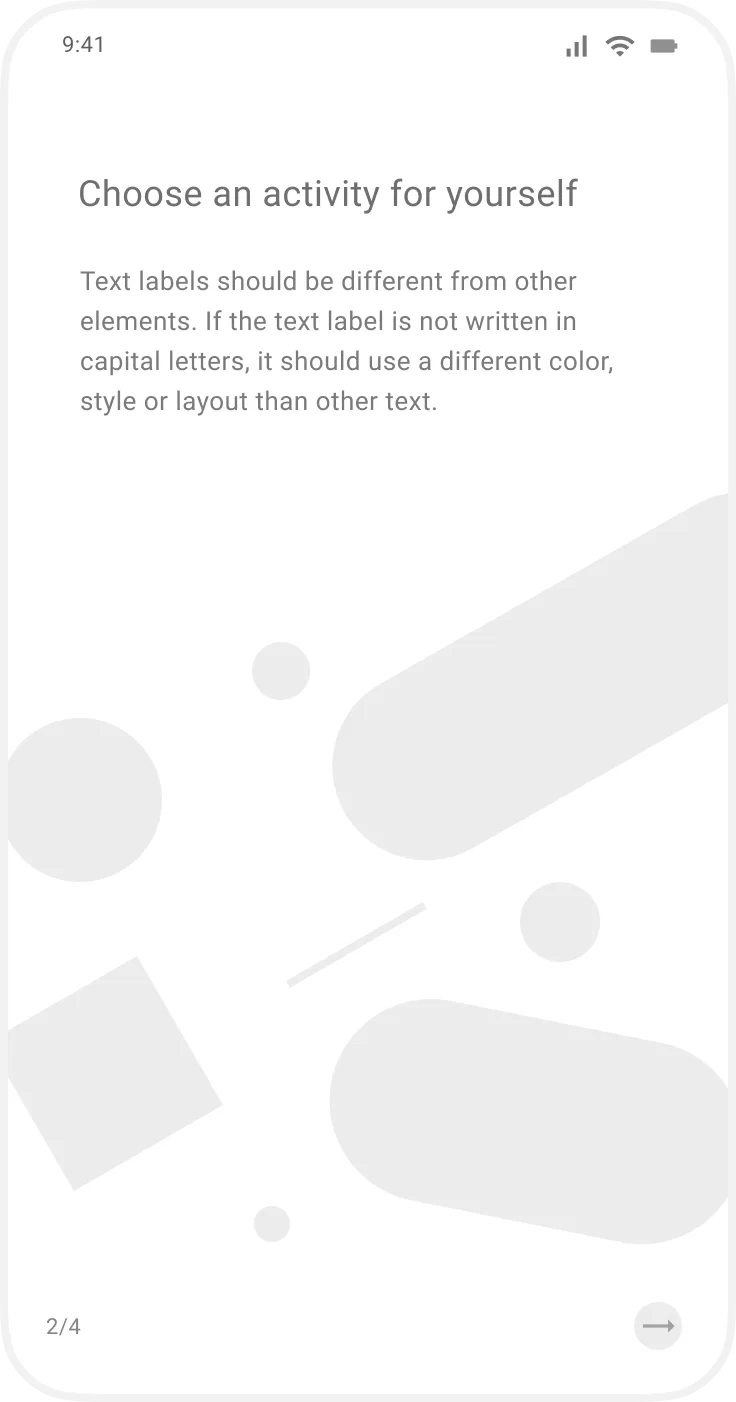
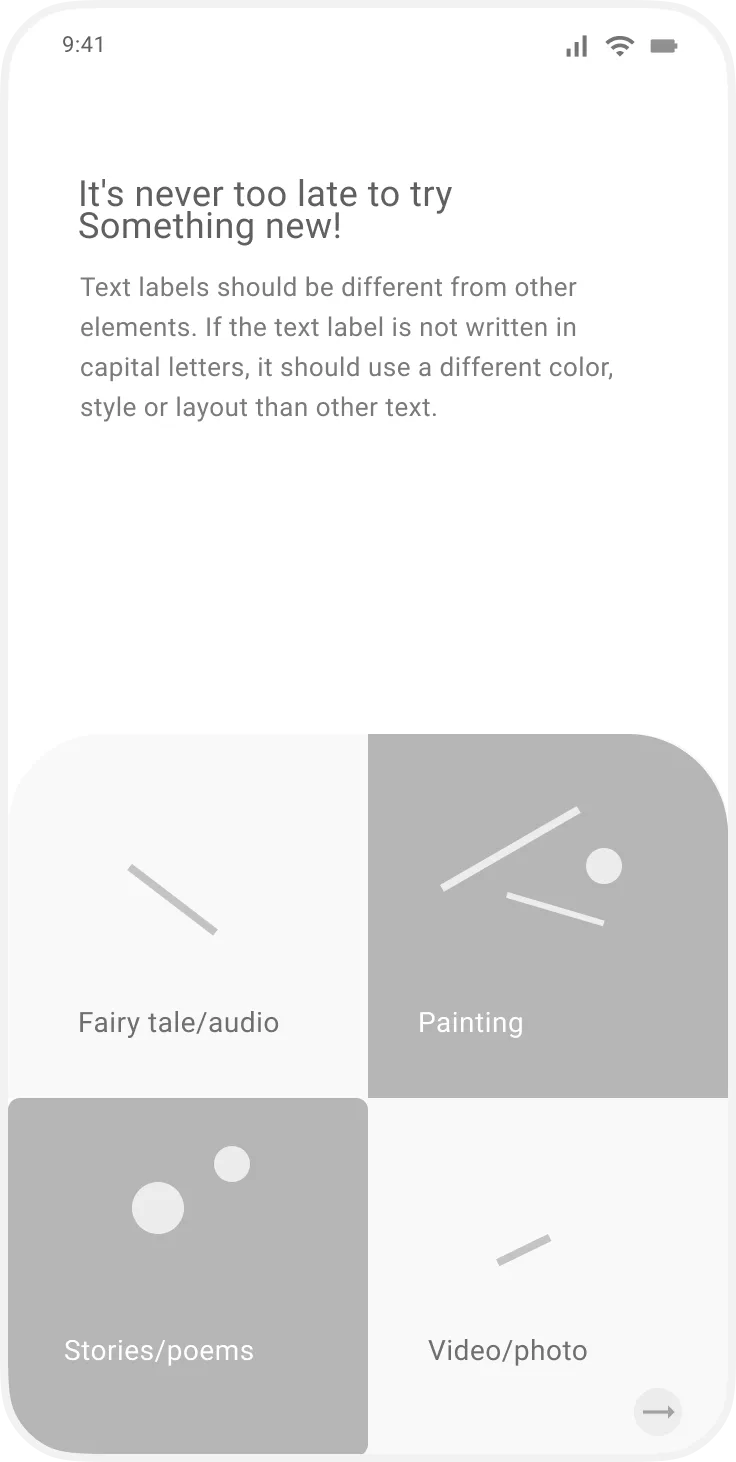
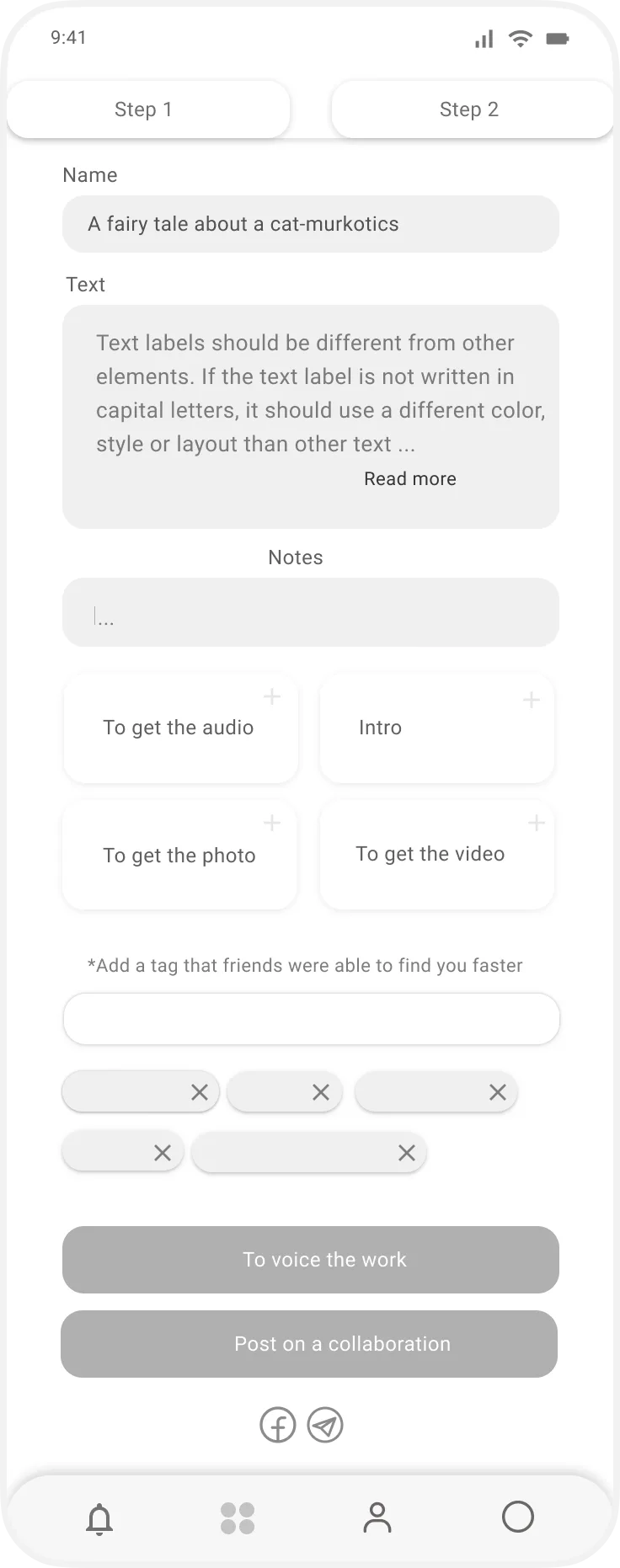
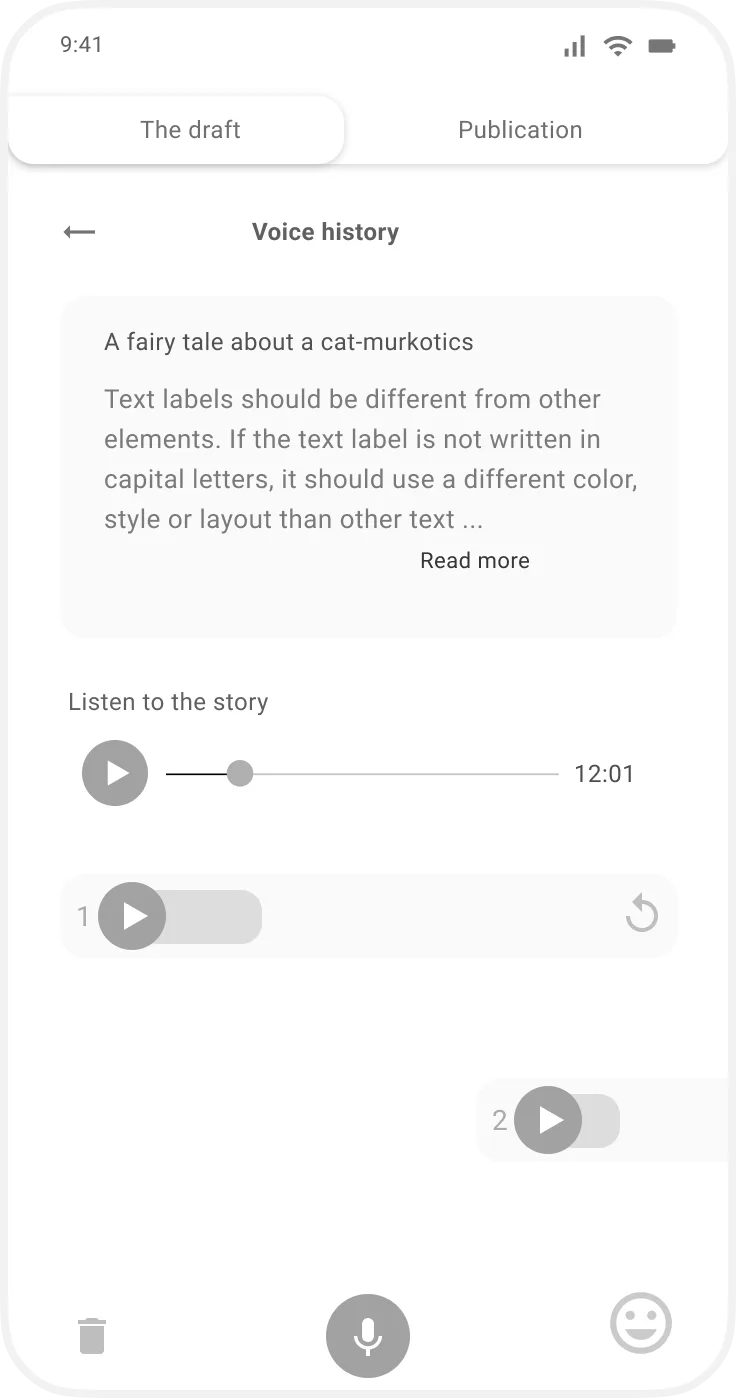
Wireframes helped test ideas fast and create a clickable prototype. We saw how the screen reader works and how blind people use the app.
The insights informed a clearer app structure and improved accessibility.
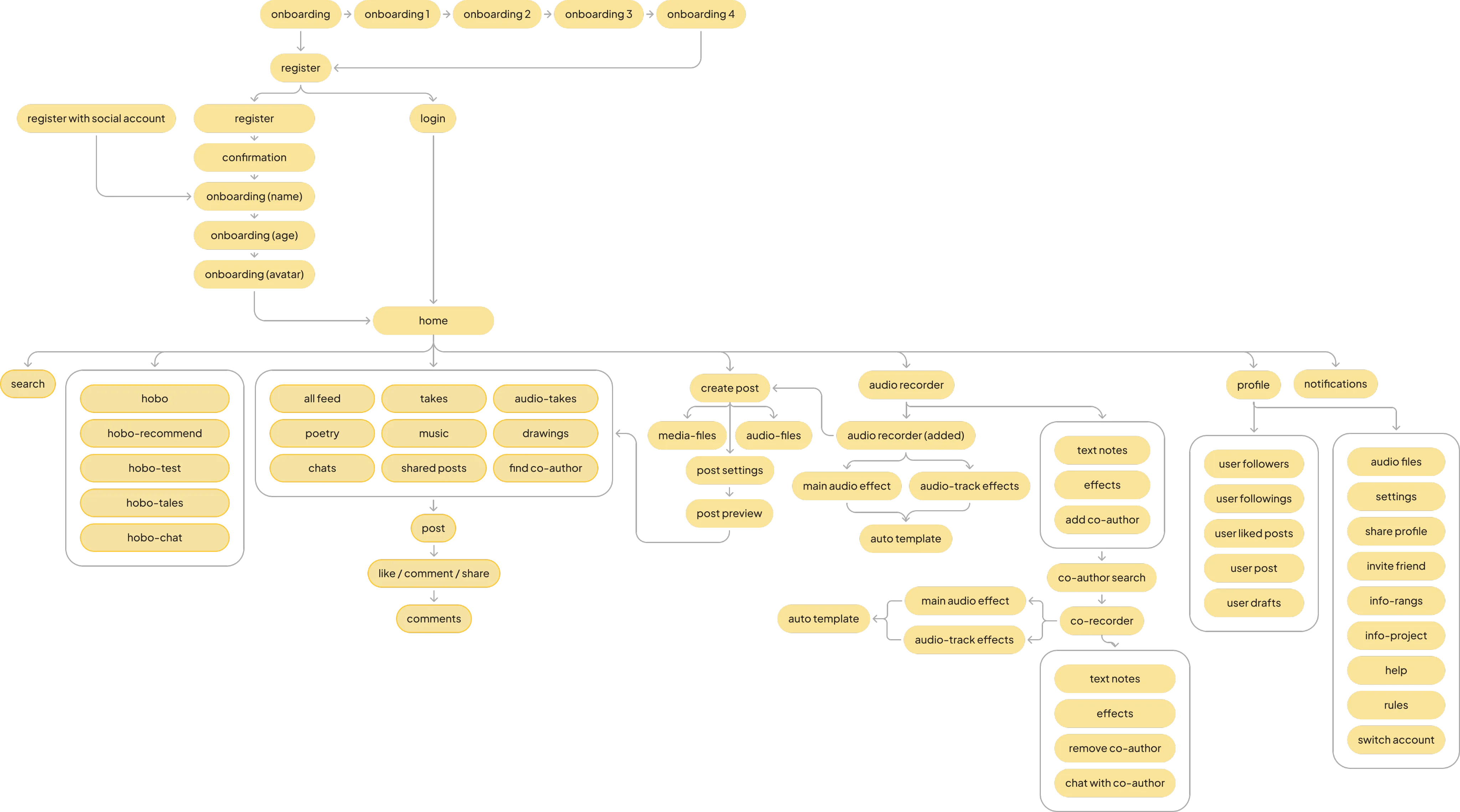
Information Architecture

The Solution
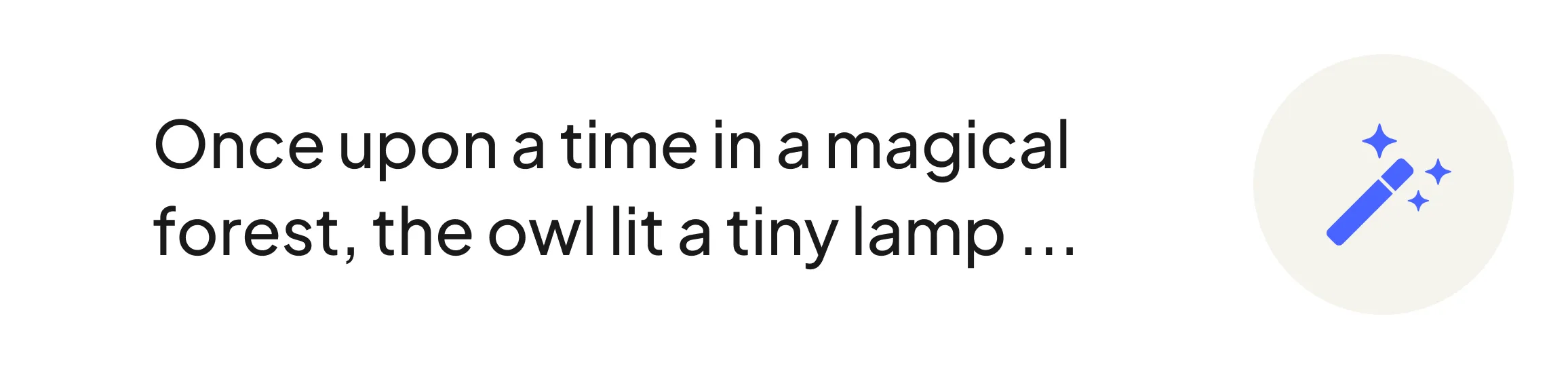
Making audio editing playful
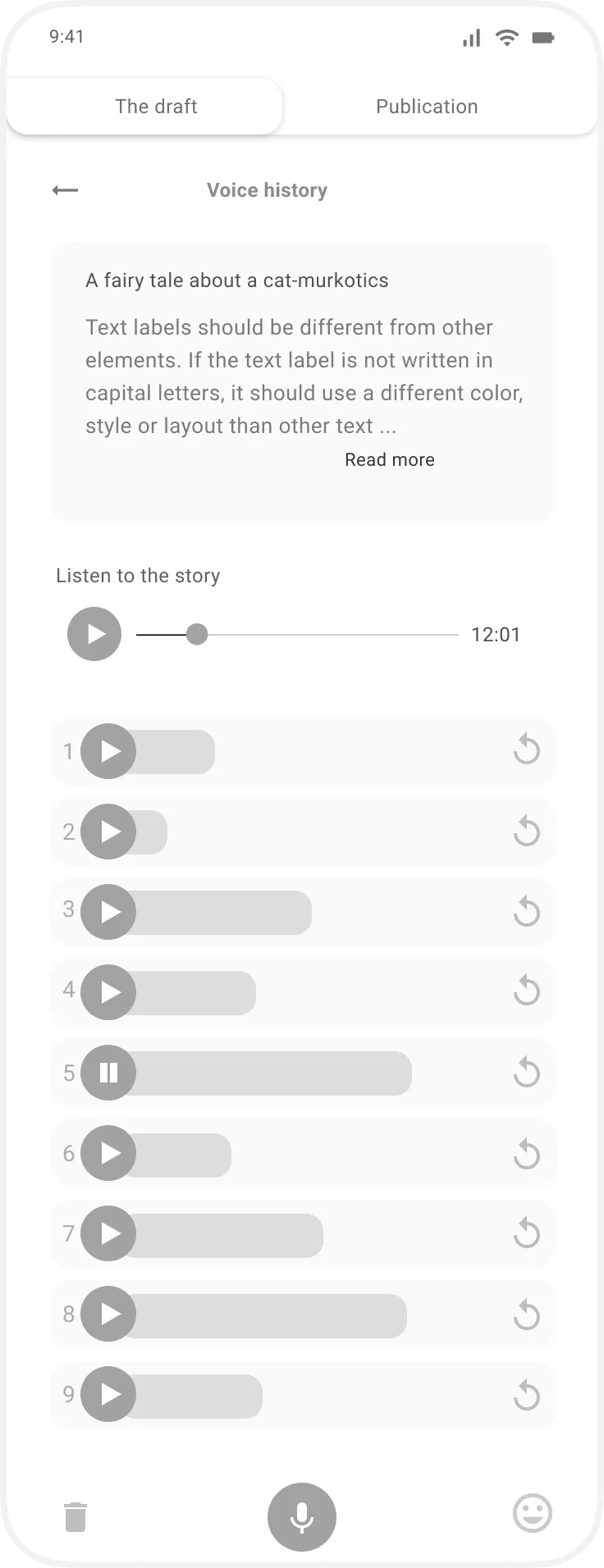
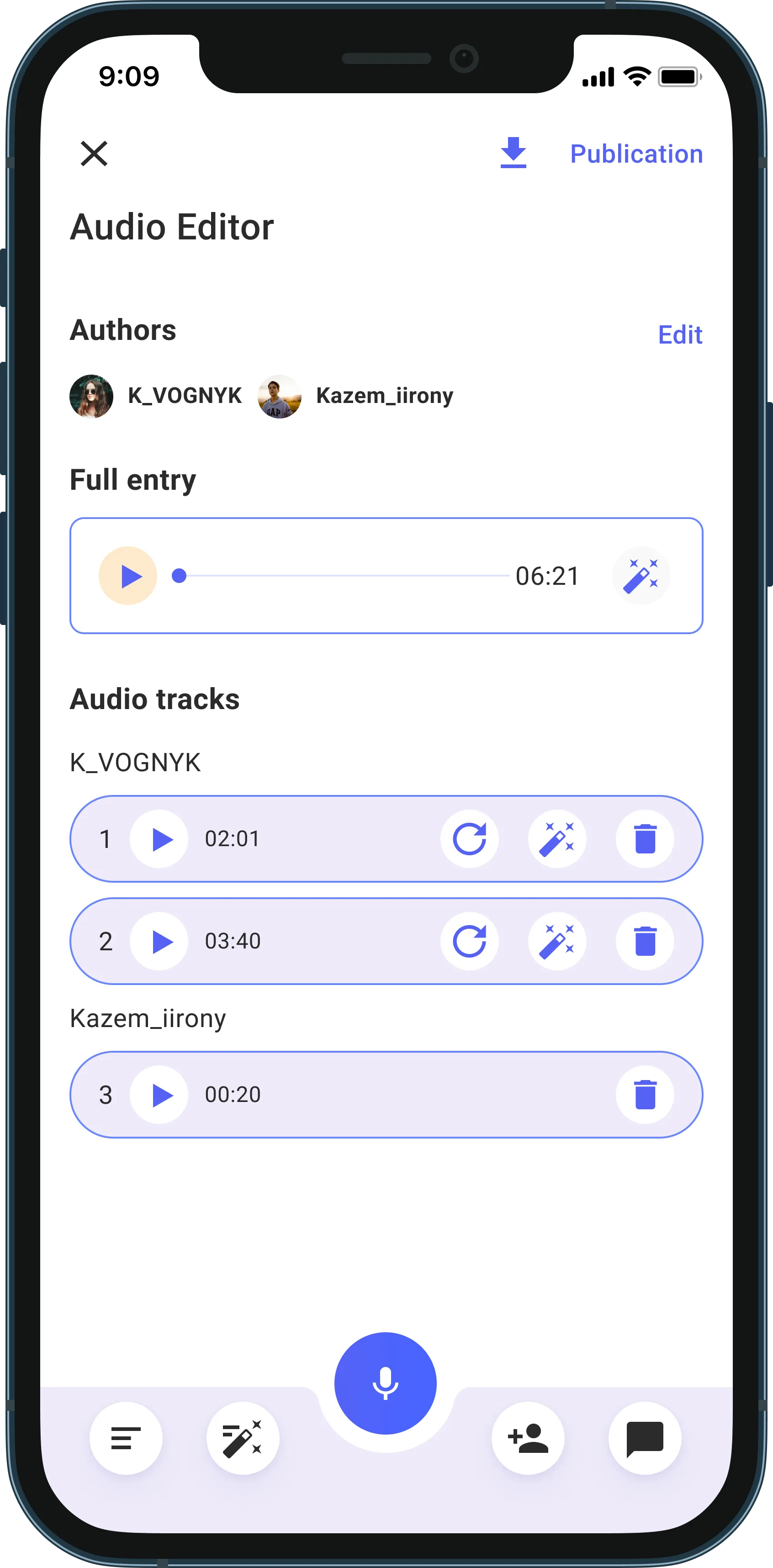
When a child records a story, they can apply playful voice effects (Storyteller, Bear, Elf) and ambient soundscapes (Forest, Rain). The interface is built for audio-first interaction. The audience is children, not podcasters, lowering the bar to creativity matters more than offering pro-level editing controls. A child who hears their story sound like a magical bear is more likely to make another one.
Once upon a time in a magical forest, the owl lit a tiny lamp ...








Social feed that puts audio first
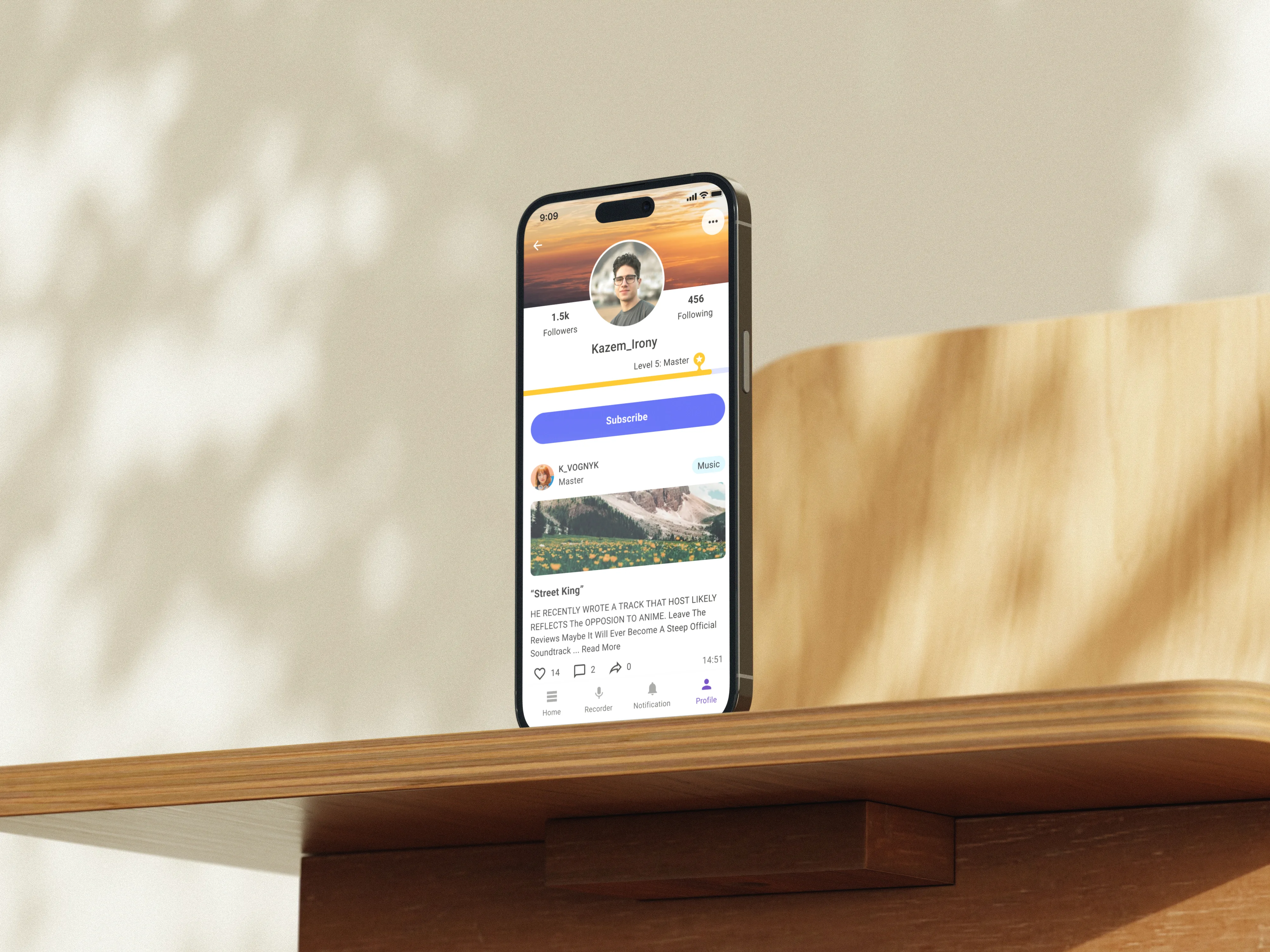
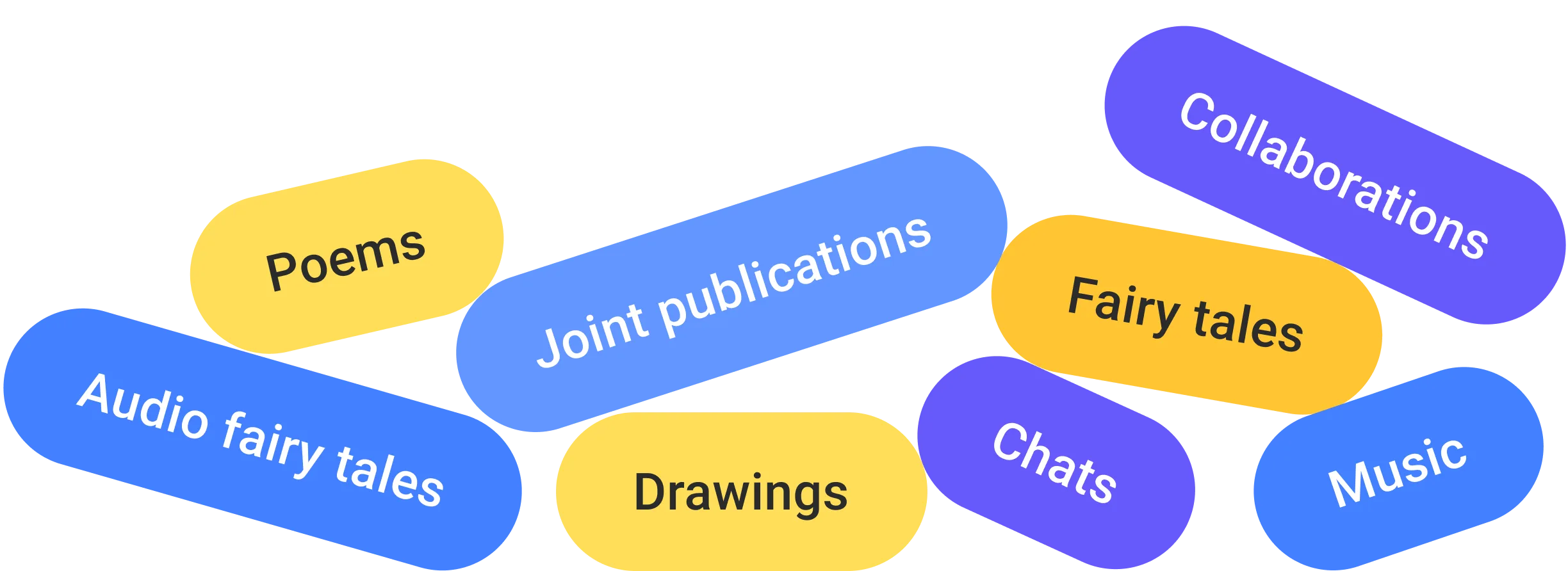
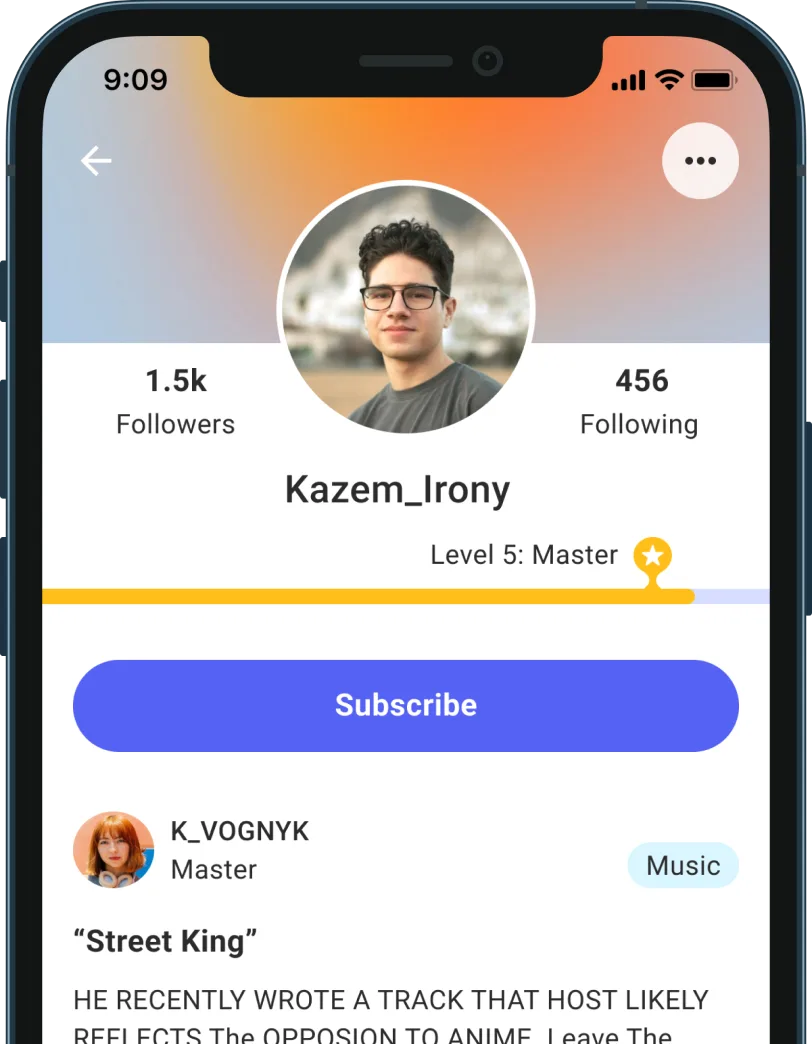
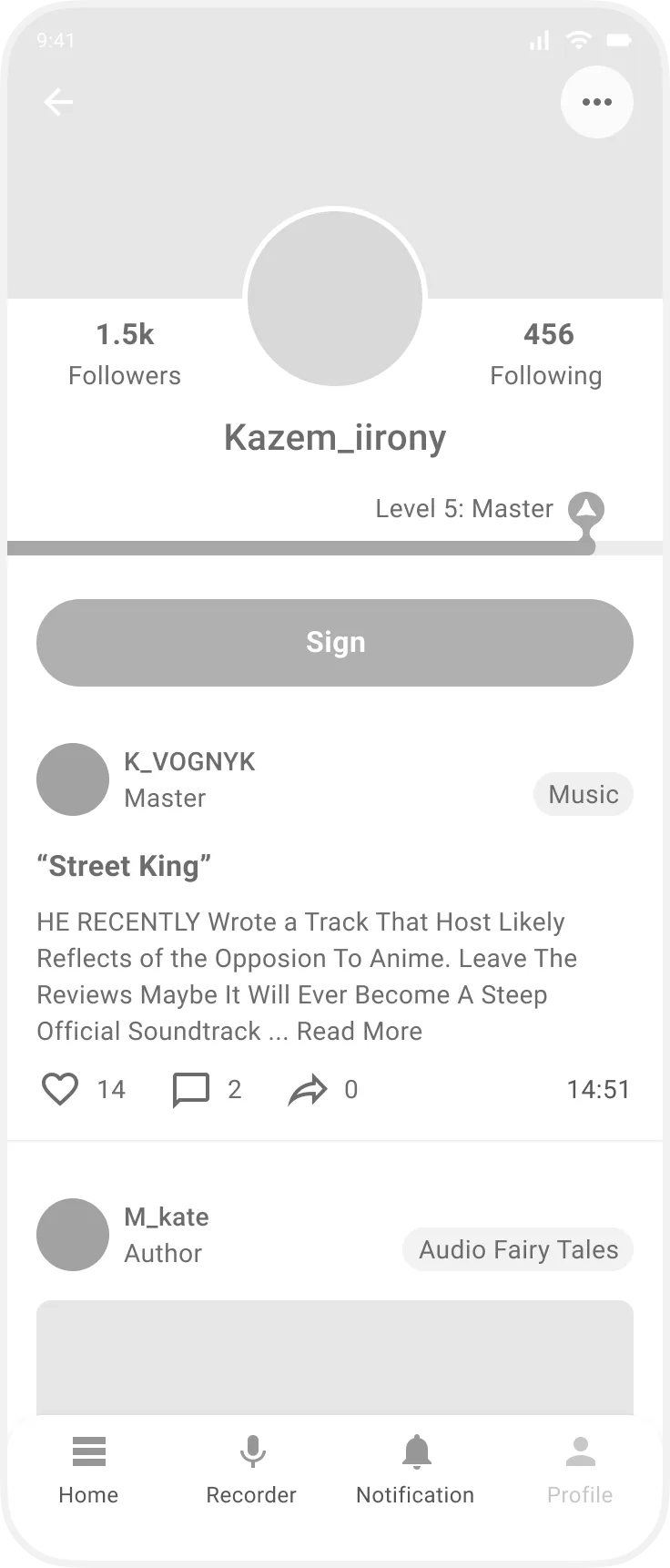
Most social feeds treat audio as second-class to images. The Hobo feed inverts that: posts can be music, audio stories, poems, or drawings, and the layout treats them all as equals. User progression (Newcomer → Amateur → Master → Legend) rewards consistent participation rather than popularity, which is a much healthier motivator for young creators building confidence.
Kazem_iirony
Master
Track under the mood of "Christmas"
K_VOGNYK
Newcomer
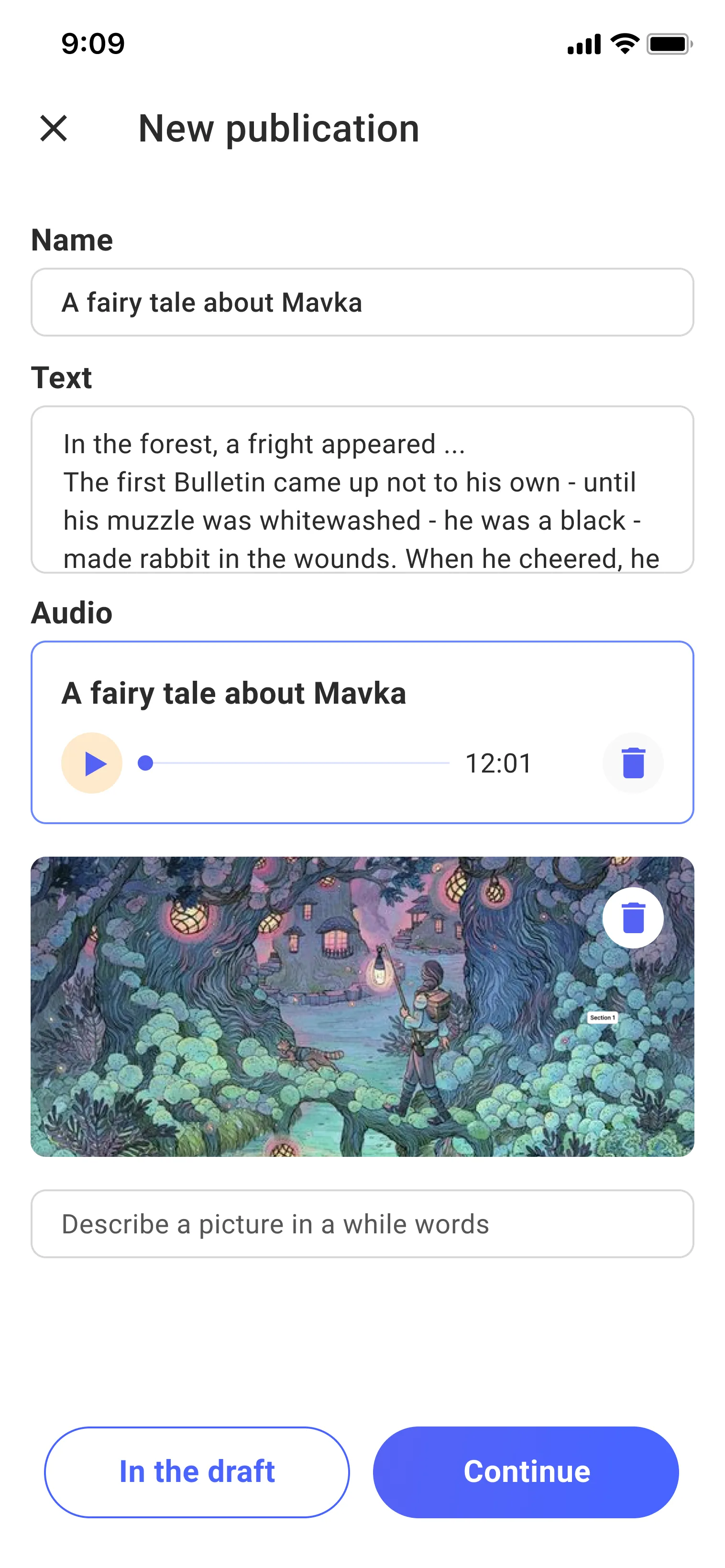
A fairy tale about Mavka
In the forest, a fright appeared ... The first messenger came up with his own - even the muzzle ... Read more
Home_alone
Legend

New Abstraction on Autumn
Jam_joy
Amateur
Strange ice cream
Ice cream so strangely loved him ... Read more
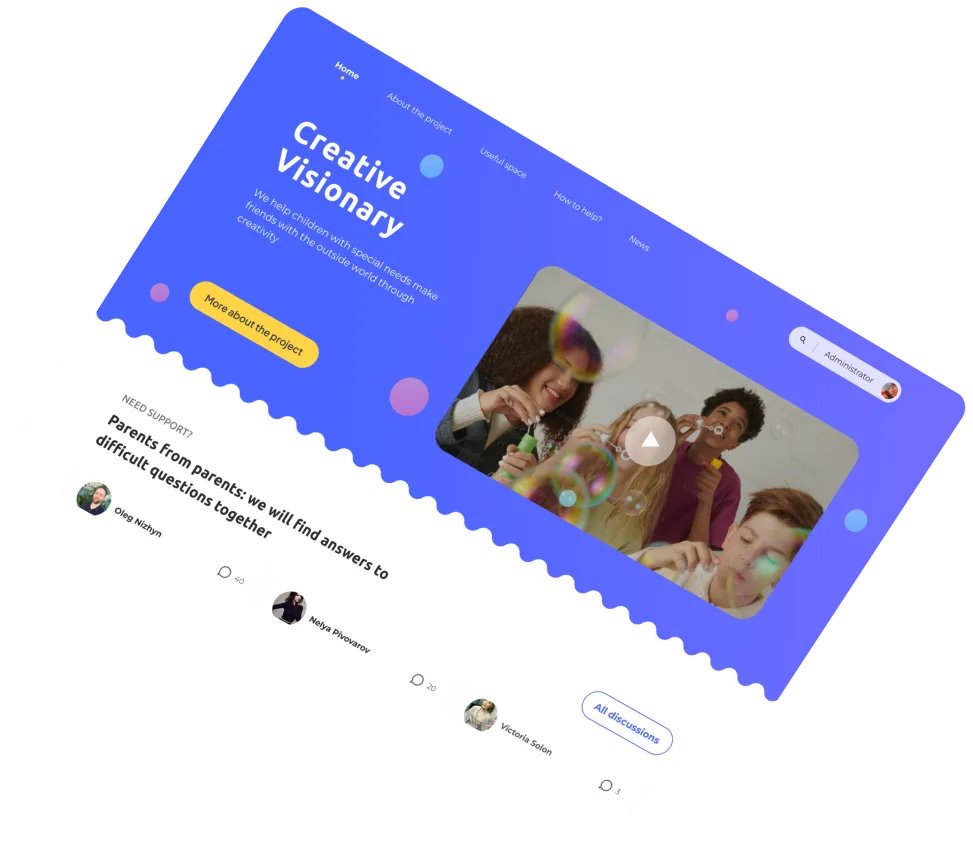
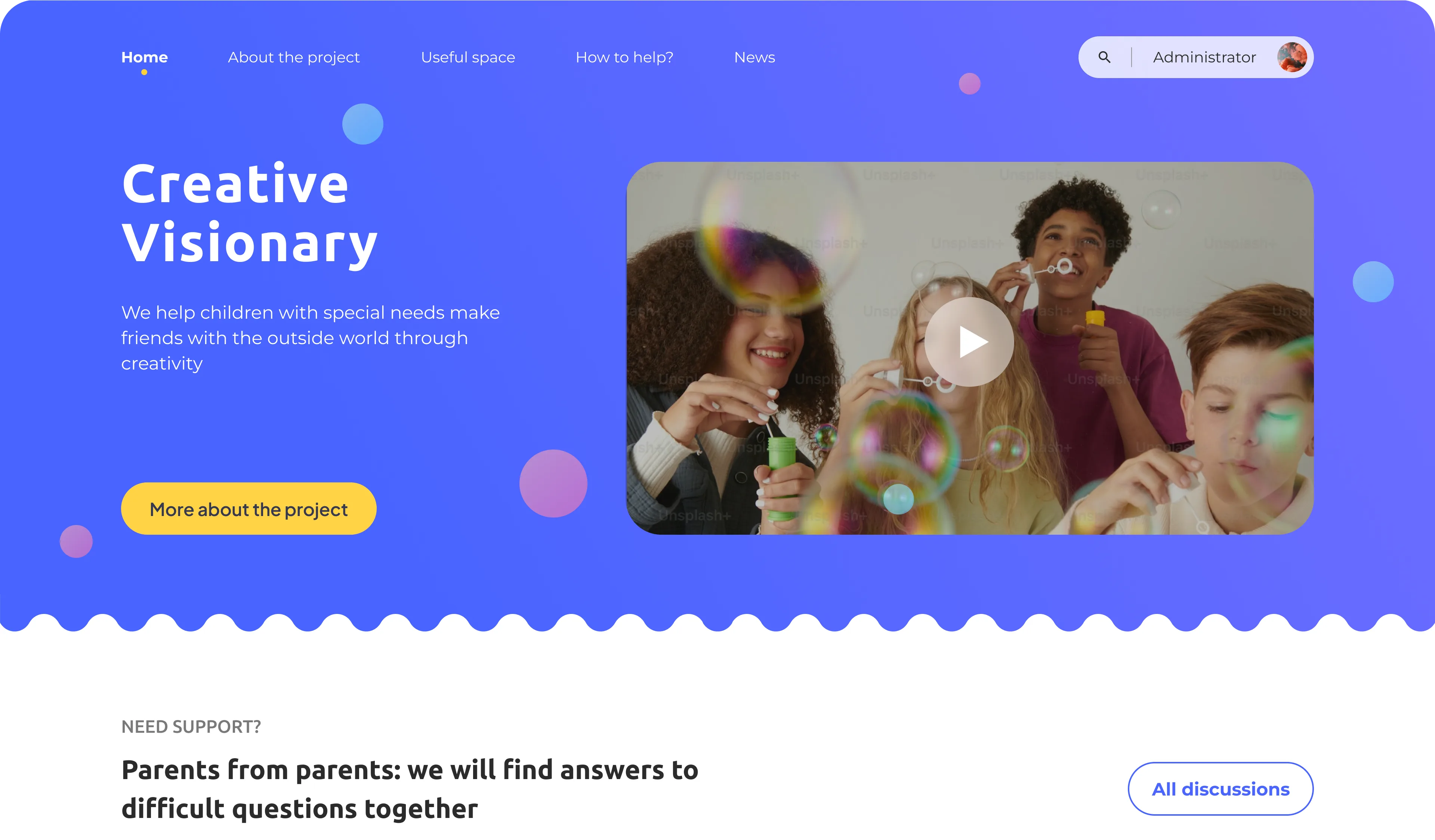
For the parents and teachers - Community website for support and growth
We created a separate companion website just for adults—parents, educators, and friends. It offers practical guides on inclusive communication, community chats, and event listings. We deliberately kept this separate from the children’s app. Mixing complex adult resources with a kid’s creative space would clutter the experience for both. Splitting them allowed us to design each platform with the perfect tone and language for its specific audience.
Outcome & Reflection
A design vision ready to build
User research and stakeholder reviews proved our concept worked. The project got a green light for production with strong team support.
Built from scratch ( 0 → 1 )
Ready for Development
Project Reflections
What surprised me
I realised the biggest barrier wasn’t the kids abilities, it was the adults fear. The kids were fearless and ready to explore, but parents were overly protective. We had to design the adult companion app not just to inform them, but to calm their anxiety so they’d let the kids be independent.
What I’d do differently
Since this was a learning project, we were still discovering which research methods worked best for this audience. Looking back, I would have spent more time on deep, one-on-one interviews and skipped the broad quantitative survey. In a project so personal and niche, general numbers don’t tell the full story. I realised that direct conversations with the children and their families provide much more value than a survey ever could.
What I carried forward
I learned that you’re never just designing for the end-user. You are designing for the entire ecosystem around them. If the parents don’t trust the app, the kids will never get to use it.